
When Adoption Readiness Lags Behind Technical Readiness
May 12, 2025
Last week, I wrote about the non-technical challenges that can hinder data-sharing. Today, I’ll take a closer look at social factors that can impede technical implementations and identify specific steps we can take to overcome them.
In the movie Field of Dreams, Iowa farmer Ray Kinsella hears a voice saying “if you build it, they will come,” urging him to construct a baseball field in the middle of his cornfields. Despite skepticism from others, Ray builds the field and soon the ghosts of legendary baseball players begin to appear and play there. Through this magical experience, Ray finds personal redemption and learns the power of following his instincts and taking risks.
As technologists, we want the tech we build to result in magical experiences for our users. But social, cultural, and organizational barriers can impede even the most well-built technical implementations. This is especially true for data-driven decision capabilities that often require collaboration with multiple people, sometimes in different organizations or teams.
When building data and knowledge centric capabilities, we need to ask ourselves, “Who will use the platform and how? What motivates users to participate? How can we increase adoption by increasing participation and collaboration towards a shared data ecosystem?
When Technology Readiness Levels are high, but Adoption Readiness Levels are low…
Technology Readiness Levels are a standardized way in which the DoD and others measure technical maturity in programs. We can use this model to say how mature a technical implementation is.
The leap from TRL 6 to 7, for example, marks a significant jump in maturity – the system is now demonstrated in an operational environment.
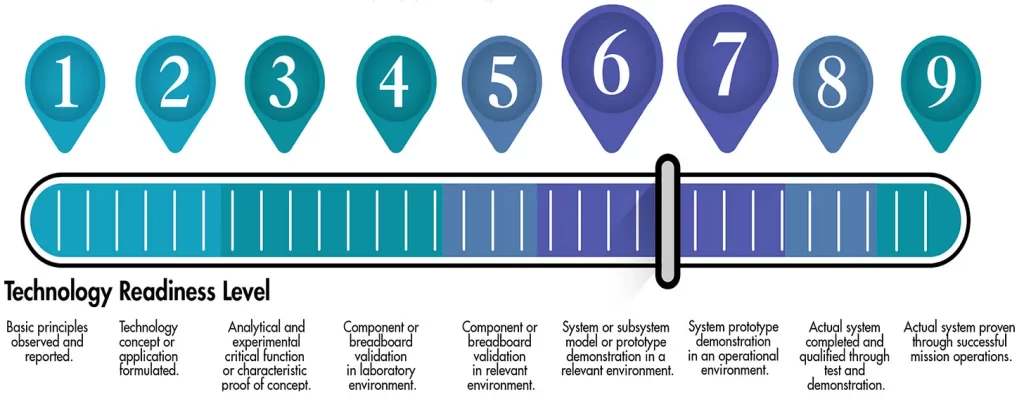
Source: https://asc.army.mil/web/news-alt-ond19-cyber-quest/
TRLs are helpful to get an assessment of how ready or mature a technology or capability is. But just because a solution has a high TRL doesn’t mean that people will use it.
When adoption readiness levels lag behind technology readiness levels, everyone gets frustrated. Senior leaders and sponsors may attempt to enforce tool adoption through policies, which users may resent as they struggle to understand and connect with the new capabilities. It can undermine the entire technical investment.
So what can we do to improve this?
Consider a “Participation Scale” to measure adoption
In their book New Power: How Power Works in Our Hyperconnected World–and How to Make It Work for You, authors Jeremy Heimans and Henry Timms discuss the notion of the “Participation Premium.” Their research confirms what human centered-designers already know – people place a higher value on experiences and products that they are able to shape.
But participation is more than just the ability to influence product design. Ensuring continued adoption and autonomous participation after deployment and throughout the product life cycle is equally important.
The Participation Scale is used to measure individual participation in a project or movement. Moving users up the participation scale increases the value they place on the technical investment.
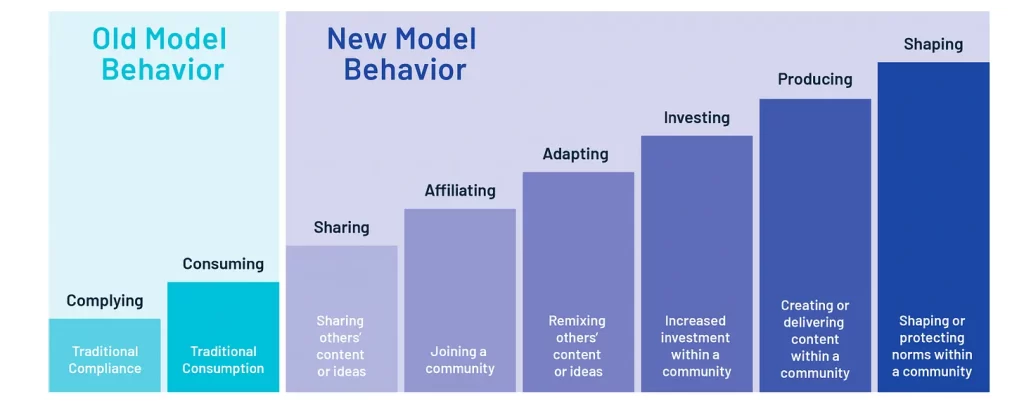
In this graph, participatory engagement is modeled on a spectrum of behaviors that can be observed in users. Increased user participation in capabilities increases adoption of technology.
Build with adoption in mind
- Building solutions with adoption in mind means incorporating targeted technical features that encourage desired behaviors and drive user engagement, ultimately boosting adoption rates. Here are some specific features to encourage users to move up the participation scale in your data environment:
- From compliance to consuming: Canned reports that are not editable are an example of low participation. Allow self-service reporting/analysis to increase participation. Additionally, create rich in-app notifications that give users more agency in their experiences.
- From consuming to sharing: Create the ability for users to save their searches as templates and share them with others.
- From sharing to affiliating: Create more social business features, such as allowing users to follow the activity of others in the data ecosystem, or to self-identify with groups of users.
- From affiliating to adapting: One of the biggest participation jumps a user can make is to take an existing capability and extend it for their own use. Allow users to borrow, clone, copy, edit, extend, fork, or publish as much as possible in the data ecosystem.
- From adapting to investing: The key behavior here is for users to go beyond what is expected of them. Gamification, badges, leaderboards, likes, following, or voting ideas up or down are all examples of ways to encourage users to go beyond today’s experience to influence future experiences.
- From investing to producing: Adding features that measure and automate the production of new knowledge – and rewarding the users who exhibit this behavior – creates “super-participants” that seek and receive recognition for their behavior.
- From producing to shaping: Reward your most productive super-participants with the ability to shape the outcomes of their team, organization, or community. Collaborative tooling to support rapid experimentation and hypothesis testing in analyses will work well for this group. These are your organization’s true knowledge workers.
Summary
Consideration of individuals as more than just stakeholders, users, or consumers of data, but as active participants in the creation and synthesis of new data (and knowledge) will improve adoption and facilitate the culture change that becoming a data-centric organization necessitates.